Choosing a custom cushion cover supplier in 2026 requires more than comparing online prices. A polished product photo can hide weak stitching, unstable fabric, or inconsistent sizing. Buyers should examine the supplier’s sampling process, material records, production capacity, and quality controls. Ask for close-up images of seams, zippers, piping, and print alignment. Then request a physical sample.
Debbie McKeegan, a recognized textile designer and digital textile consultant, offers a useful principle: “The best supplier is not always the cheapest; it is the one that protects your design through production.” This idea matters in Custom Cushion Cover Manufacturing, where small errors become expensive across hundreds of covers. A 3-millimeter pattern shift may look minor on one cushion. Across a coordinated collection, it can damage the entire visual balance.
Reliable suppliers should explain fabric composition, shrinkage testing, color approval, packaging, and lead times in clear language. They should also welcome reasonable questions instead of avoiding them. Look for documented inspections and consistent communication. A factory tour, video call, or production walkthrough can reveal more than a sales brochure.
Some buyers focus too heavily on minimum order quantity. That is understandable, but incomplete. A low minimum does not guarantee dependable quality. A large factory may also overlook small custom details. The better choice depends on your product complexity, target market, and tolerance for rework. No supplier is perfect. Still, careful verification can expose weak processes before money and reputation are at risk.
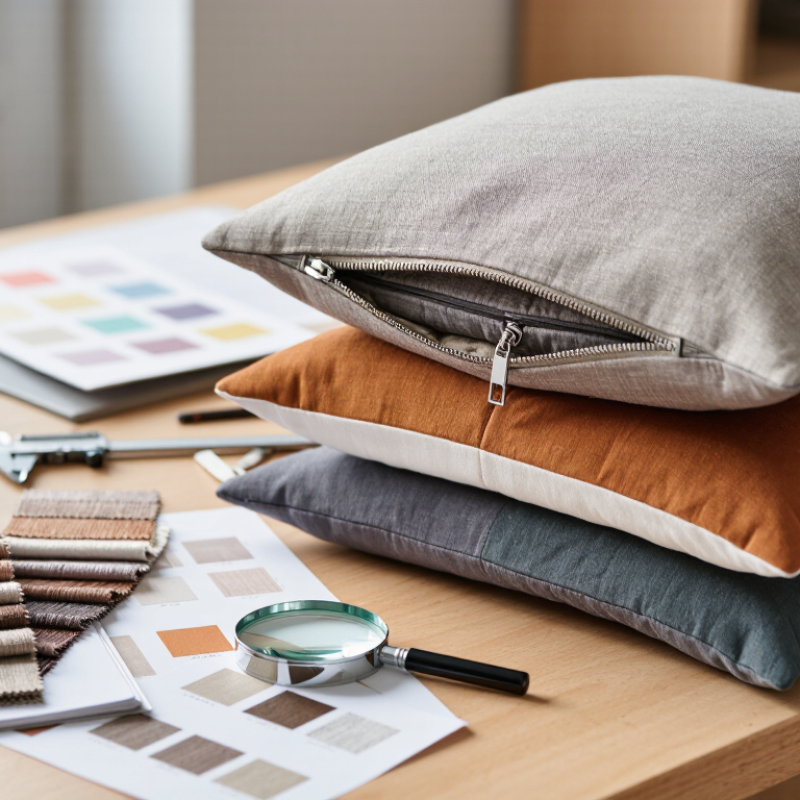
Choosing a custom cushion cover supplier starts with a precise product brief. Record the finished size, seam allowance, closure type, and cushion thickness. A 45 × 45 cm cover may fit poorly if the insert is overfilled. Specify fabric weight, weave, color tolerance, shrinkage limit, and washing method. Add a physical reference sample when appearance matters.
Material decisions need evidence, not guesswork. Textile Exchange reported that global fiber production reached about 124 million tonnes in 2023, with polyester representing roughly 57% of the total. This makes fiber selection important for cost, durability, and environmental reporting. Ask suppliers for fiber composition, recycled-content verification, colorfastness results, and test methods. Request abrasion data too. A decorative cover may need different performance than a hotel or outdoor cover.
Think about use conditions. Will children touch it daily? Will sunlight reach it? Will the zipper open after repeated washing? State the expected wash cycles and acceptable dimensional change. A supplier should confirm sampling, inspection points, packaging, and replacement terms in writing. The home textiles market continues to expand, and Grand View Research estimates its global value at more than 130 billion dollars in the mid-2020s. Competition is strong, but vague specifications still create expensive mistakes. I would not assume a beautiful sample proves production consistency. It does not. Ask for a pre-production sample, inspect the seams by hand, and revise the brief when real testing exposes weaknesses.
How to Choose a Custom Cushion Cover Supplier in 2026?
When comparing suppliers, start with the material rather than attractive catalog photos. Request physical swatches for cotton, linen blends, velvet, and recycled fabrics. Check their weight, weave, color consistency, and shrinkage after washing. A fabric may feel soft but wear quickly under daily use. Ask for abrasion results and clear care instructions. Sample first.
Craftsmanship appears in small details. Examine straight seams, even piping, reinforced zipper ends, and clean inner stitching. For outdoor covers, inspect water resistance and UV performance instead of accepting vague claims. A dependable supplier should explain fabric tolerances, inspection standards, and replacement procedures. Ask who checks each order. The answer matters.
Customization should go beyond choosing dimensions. Confirm options for printing, embroidery, welt cords, hidden zippers, labels, and unusual shapes. Send a measured drawing with corner details and tolerance requirements. Request a pre-production sample, especially for repeated orders. Digital colors can differ from fabric colors. That mistake is common. Lead times, minimum quantities, packaging, and communication also deserve written confirmation. I would test one finished cover in its real setting for a week. It may reveal stiffness, slipping, or fading that a showroom sample hides. Suppliers should welcome such feedback, although not every correction will be inexpensive. Reliability grows when expectations, defects, and revisions are recorded clearly.
Compare supplier materials, craftsmanship, and customization options using a neutral buyer-side scoring framework.
Scores use a 1–10 evaluation scale. Materials considers fabric variety, performance options, and suitability for indoor or outdoor use. Craftsmanship considers seam consistency, zipper quality, edge finishing, and production control. Customization considers available sizes, colors, patterns, labels, packaging, and low-volume flexibility. The profiles are anonymous benchmark categories rather than company or brand data.
A supplier’s production capacity should match your real order pattern, not only its factory tour. Ask for monthly capacity, current utilization, minimum order quantity, and backup equipment. A capable supplier should explain how it handles fabric shortages and urgent repeats. Request production records from comparable orders, with sensitive details removed. In my sourcing experience, impressive machinery means little when scheduling is vague. I once underestimated packaging time. That mistake delayed delivery.
Quality control needs measurable checkpoints. Ask for incoming fabric inspection, colorfastness testing, seam-strength checks, zipper testing, and final random inspection. Define acceptable defect limits before sampling begins. ISO Survey 2023 recorded more than 1.2 million ISO 9001 certificates worldwide, but certification alone does not prove careful workmanship. Review the supplier’s audit scope, renewal date, and corrective-action records. A clear inspection report should show batch numbers, measurements, photos, and rejected quantities. Small details matter.
Certifications should fit the product and buyer requirements. For recycled or organic materials, verify transaction certificates and chain-of-custody documents. Textile Exchange’s 2024 Materials Market Report estimated polyester represented about 59% of global fiber production in 2023. That figure makes fiber traceability increasingly important. Request test reports for restricted substances, color migration, and wash durability from accredited laboratories. Check whether documents identify the exact fabric composition. Some suppliers provide beautiful certificates with weak product linkage. That is uncomfortable, but it deserves attention. A practical supplier welcomes questions, records failures, and improves after them.
A reliable supplier should provide a clear quotation, not one attractive unit price. Check fabric, zipper, piping, labels, packaging, and freight separately. Ask whether setup fees, pattern changes, and color matching are included. A low price can hide costly revisions. In my sourcing experience, comparing three written quotations reveals these gaps quickly. Still, my first comparison was flawed because I ignored packaging volume. That mistake increased storage costs.
Minimum order quantities need careful attention. A supplier requesting 500 covers may offer better pricing, but unused stock ties up cash. Ask whether different colors share one production minimum. Confirm the price difference between 100, 300, and 500 pieces.
Request a physical sample before approving bulk work. Check stitching, seam strength, zipper movement, fabric weight, and color under daylight. A sample is evidence.
Delivery terms must be written clearly. Confirm sample time, production time, inspection timing, and dispatch time separately. Ask who handles export documents, freight booking, and possible destination charges. A supplier should explain its chosen delivery term in plain language.
Build a buffer for fabric delays and rework. Do not trust an optimistic date without production capacity evidence. One overlooked detail matters: ask how damaged or short shipments are recorded and resolved.
The best supplier may not be the cheapest. Reliability becomes visible in small, documented promises.
When choosing a custom cushion cover supplier in 2026, communication reveals operational discipline. Ask how quickly they answer technical questions. Request fabric composition, color references, zipper details, and tolerance ranges in writing. A reliable supplier should explain sampling, revisions, production timing, and inspection procedures clearly.
Small tests matter. Send the same specification through email and messaging. Compare the replies. Do both teams understand the measurements? Do they confirm missing details instead of guessing? Ask for dated production photos and shipment updates. Silence is information. Fast replies alone prove little.
Customer feedback adds another layer of evidence. The 2024 Local Consumer Review Survey reported that 91% of consumers read online business reviews.
The Spiegel Research Center found that displaying five reviews can raise purchase likelihood substantially, by up to 270% in some conditions.
Treat these figures carefully. Reviews can be incomplete or selectively presented. Check recent comments, repeated complaints, fabric photographs, and responses to quality problems. Ask whether reviewers purchased similar quantities and specifications.
A supplier with only perfect feedback may deserve closer inspection. No checklist is perfect. I would still value a detailed complaint with a fair response over vague praise.
Review patterns often expose weak stitching, inaccurate colors, delayed samples, or poor after-sales communication before a large order begins.
Include finished size, seam allowance, closure type, and cushion thickness. Add fabric weight, color tolerance, shrinkage limits, and washing instructions. A measured drawing prevents avoidable mistakes.
Request physical swatches for cotton, linen blends, velvet, and recycled fabrics. Check fiber composition, weave, weight, abrasion resistance, and colorfastness. Soft fabric can still wear quickly.
A sample reveals color, stiffness, fit, and stitching quality. Digital colors can differ from fabric colors. Test one cover in its real setting for a week.
Check straight seams, even piping, reinforced zipper ends, and clean inner stitching. Open and close the zipper repeatedly. Small defects often become larger after washing.
Confirm printing, embroidery, welt cords, hidden zippers, labels, and unusual shapes. Share corner details and tolerance requirements. Customization is more than changing dimensions.
Ask for water-resistance and UV-performance information. Check the fabric after sunlight exposure and light moisture. Vague performance claims need evidence.
Send identical specifications by email and messaging. Compare whether both teams understand the measurements. Ask for dated production photos, inspection steps, and shipment updates. Fast replies prove little.
Read recent comments about stitching, color accuracy, delays, and after-sales support. Look for photographs and detailed complaints. Perfect feedback may deserve closer inspection. No checklist is perfect.
Choosing the right custom cushion cover supplier in 2026 begins with clearly defining your requirements, including dimensions, fabric preferences, colors, patterns, closure styles, branding details, and intended use. During the selection process, compare suppliers based on material quality, stitching precision, printing or embroidery capabilities, and flexibility in customization. A reliable partner should also demonstrate suitable production capacity, consistent quality-control procedures, and relevant certifications that support safe and dependable manufacturing.
Before placing an order, review pricing, minimum order quantities, sample policies, payment conditions, packaging, and delivery timelines. Samples can help confirm fabric performance, color accuracy, workmanship, and product fit before full-scale production. Clear communication is equally important, especially when discussing revisions, quality standards, and deadlines. Check customer feedback and request evidence of previous work to assess reliability. By evaluating these factors together, businesses can select a supplier capable of delivering consistent results and supporting long-term Custom Cushion Cover Manufacturing needs.