Finding the right cut and sew partner can shape a brand’s quality, margins, and reputation. Cut and Sew Clothing Manufacturing involves more than stitching fabric into finished garments. It requires dependable pattern development, accurate grading, careful fabric handling, and consistent production control.
A suitable manufacturer should demonstrate real experience with similar products. Ask to inspect a sample room, review previous work, and examine stitching at stress points. A strong supplier can explain seam allowances, shrinkage testing, fabric defects, and size tolerance without hiding behind vague promises. Request a clear tech pack review. Confirm minimum order quantities, sample fees, production capacity, lead times, and payment terms before making decisions.
Small details matter. Look for even topstitching, clean thread trimming, secure labels, and matching patterns across seams. Reliable factories should also document quality inspections and follow applicable workplace, product safety, and environmental requirements. Certifications can support credibility, but they should be verified independently. A certificate alone cannot guarantee excellent garments.
Communication deserves equal attention. During sampling, note how quickly the manufacturer answers questions and corrects mistakes. Some delays may reveal weak planning, although every factory can face unexpected problems. No supplier is perfect. The better question is whether concerns are reported early and solved professionally.
A practical evaluation should compare several manufacturers, not only the lowest quotation. Cheap production can become expensive after rejected samples, missed launches, or inconsistent sizing. The strongest choice usually balances craftsmanship, transparency, capacity, and responsible business practices. Careful research now can protect both the clothing line and the customers who wear it.
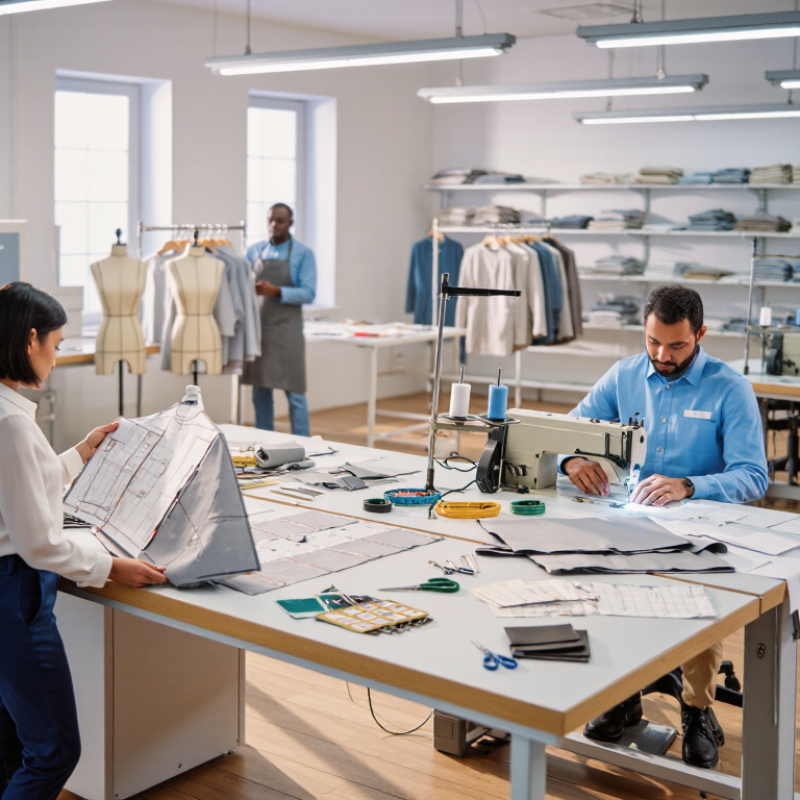
Finding the right cut and sew clothing manufacturer starts with a precise product brief. Define the garment type, fabric composition, GSM, color standard, measurements, seam construction, trims, labeling, and acceptable tolerances. Add target quantities, cost limits, delivery dates, and quality checkpoints. A manufacturer cannot solve unclear requirements efficiently.
Textile Exchange’s Materials Market Report 2024 estimates that global fiber production reached 124 million tonnes in 2023. Polyester represented about 57% of that volume. This scale makes fabric traceability and composition verification practical priorities, not decorative details. Ask for test reports, shrinkage results, colorfastness data, and evidence supporting any recycled-content claim. Keep a physical reference sample beside the tech pack.
Set measurable manufacturing goals before requesting quotations. For example, specify a 2% measurement tolerance, a pre-production sample approval, and inspection before shipment. Confirm the factory’s machinery, daily capacity, minimum order quantity, and experience with your construction details. An attractive sample can hide weak production controls. My first briefs were often too optimistic about timelines and revisions. Allow room for failed samples. That mistake is cheaper than rushing bulk production.
How to Find the Best Cut and Sew Clothing Manufacturer?
Research Cut and Sew Manufacturers by Expertise and Capabilities
A strong manufacturer should match your product category, not merely offer a low quote. Review previous work in woven shirts, stretch activewear, knitwear, or outerwear. Each category demands different machines, seam controls, and finishing skills. Ask for sample photos and production records. Better still, inspect a physical sample under natural light.
Material knowledge matters as much as sewing quality. Textile Exchange’s Materials Market Report 2024 states that global fiber production reached 124 million tonnes in 2023. It may reach 160 million tonnes by 2030. Manufacturers must understand fiber behavior, fabric shrinkage, colorfastness, and cutting waste. Request fabric test reports, approved swatches, and a clear pre-production process. Small details reveal expertise.
Look beyond machine counts. Check pattern-making ability, grading accuracy, quality checkpoints, and monthly capacity. The manufacturer should explain its process for seam strength, measurements, and final inspection. A useful factory visit follows one garment from fabric spreading to packing. Ask who handles corrections. Ask how defects are recorded.
Do not trust polished samples alone. They can hide weak production systems. Request a small pilot order before committing to larger volumes. This may cost more initially. It can expose communication gaps, inconsistent sizing, or unrealistic timelines. The approach is not perfect, but it creates evidence. McKinsey and The Business of Fashion’s State of Fashion 2024 also notes continued pressure on costs and supply-chain resilience, making capability research essential rather than optional.
Choosing a cut and sew manufacturer requires evidence, not attractive samples alone.
Check seam strength, stitch density, shrinkage, colorfastness, and measurement tolerance. Request an inspection report for every production stage. AQL 2.5 may suit some orders, but your product risk should determine the limit. ISO 9001 certification can indicate controlled processes, yet it cannot guarantee perfect workmanship. The ISO Survey 2023 recorded more than 1.2 million ISO 9001 certificates worldwide, so certification is common, not automatically exceptional.
Certifications should match the garment’s claims. Global Organic Textile Standard supports organic-fiber traceability and environmental controls. OEKO-TEX Standard 100 focuses on harmful-substance testing. Verify the certificate number, scope, facility address, and expiry date directly. Textile Exchange’s Materials Market Report 2024 estimated global fiber production at 132 million tonnes in 2023. That scale makes traceability increasingly important. A factory must also prove capacity with production records, machine lists, operator counts, and current utilization. Ask how many lines are available during peak months. Confirm whether subcontracting is permitted. I have seen impressive facilities miss deadlines because capacity was already committed. That warning is easy to overlook.
Tips: Send a technical pack before requesting prices. Ask for a small pilot order. Measure defect rates and delivery performance. Compare promised capacity with actual weekly output. Keep a written corrective-action process. A factory may pass an audit and still need closer supervision. Review the evidence again.
Choosing a cut and sew clothing manufacturer requires more than comparing unit prices. Request samples made with the same fabric, trims, labels, and construction details as your final order. Check seam strength, stitch consistency, measurements, pressing quality, and fabric shrinkage after washing. A sample can look excellent under bright studio lights but fail after one laundry cycle. Ask whether revisions are included and record every approved measurement in a technical file.
Pricing needs a clear breakdown. Compare fabric, labor, trims, packaging, sampling fees, and shipping separately. A cheaper quote may exclude testing, pattern adjustments, or small-batch surcharges. Review minimum order quantities by style, color, and size, not only by total units. Lead times should also be divided into sampling, material sourcing, production, inspection, and delivery. Request realistic dates in writing. Delays often begin with late fabric approval. My less comfortable observation is that buyers sometimes accept optimistic schedules because they fit launch plans. That decision usually creates pressure later.
Tips: Use a comparison sheet with identical questions for every manufacturer. Ask for recent production photos, quality-control procedures, and references from comparable projects. Confirm how defects are measured and corrected before paying a deposit. Leave time for one unexpected revision. It may feel inefficient, but clothing development rarely follows a perfect timeline.
How to Find the Best Cut and Sew Clothing Manufacturer?
Communication reveals more than a polished showroom. Ask who owns your account, how quickly they respond, and who approves production changes. Require written confirmations after calls, including fabric codes, measurements, quantities, and deadlines. A practical standard is a response within one business day. Slow replies during sampling often become serious delays during bulk production.
Contracts should define every measurable detail. Include approved samples, measurement tolerances, testing requirements, payment stages, delivery dates, defect handling, and subcontracting rules. The Fashion Transparency Index 2023 reviewed 250 companies and reported an average transparency score of only 26%. This gap matters. Ask for factory addresses, production capacity, audit records, and references from comparable orders. A confident answer is useful; documented evidence is better. A perfect first sample proves little.
Tips: Send a short communication test before signing. Request a revised tech pack within 48 hours. Check whether the factory reports problems early, not after shipment. Add a written change-control process to the contract. Verify production through independent inspections or dated video calls. Do not rely on promises alone. I have seen attractive samples hide weak quality systems, so keep a small pilot order before committing to a long-term relationship. Contract language may feel excessive, but vague expectations usually cost more later.
Use this practical supplier-screening matrix to compare manufacturers before placing a development order or signing a long-term production agreement.
| Evaluation Area | Verification Dimension | Recommended Benchmark | Evidence to Request | Priority | Weight |
|---|---|---|---|---|---|
| Communication | Response speed | Replies to routine questions within one business day and identifies an accountable contact person. | Email or messaging records, named account manager, escalation contact, and working-hour coverage. | High | 10% |
| Communication | Technical understanding | Can accurately interpret measurements, construction details, grading rules, artwork, fabric composition, and tolerances. | Completed tech-pack review, written clarification list, measurement comments, and pre-production sample notes. | High | 12% |
| Communication | Sample feedback process | Provides dated sample comments, revision status, open issues, and approval checkpoints before bulk production. | Sample approval form, fit-comment template, revision log, and confirmation of the approved reference sample. | High | 10% |
| Contracts | Product specifications | The agreement clearly defines fabric, trims, color standards, measurements, workmanship, labeling, packaging, and acceptable tolerances. | Signed manufacturing agreement, approved tech pack, bill of materials, measurement chart, and packaging specification. | High | 12% |
| Contracts | Price and payment terms | Unit price, development charges, tooling costs, payment milestones, currency, taxes, and refund conditions are written and unambiguous. | Formal quotation, purchase-order terms, payment schedule, bank-account verification, and change-order procedure. | High | 10% |
| Contracts | Delivery responsibility | Lead time starts from a defined trigger, such as deposit receipt or final sample approval, and includes a remedy for avoidable delays. | Production calendar, Incoterms® rule, shipping responsibilities, inspection window, late-delivery clause, and force-majeure wording. | High | 12% |
| Contracts | Quality and remediation | Inspection timing, defect classification, rework or replacement obligations, and payment hold rights are documented before production. | Quality-control checklist, AQL inspection standard if used, defect definitions, corrective-action process, and claims procedure. | High | 12% |
| Reliability | Production capacity | Available capacity matches the expected order quantity without depending on undisclosed subcontractors or unrealistic overtime. | Monthly capacity statement, current production loading, line layout, equipment list, and approved subcontractor disclosure. | Medium | 8% |
| Reliability | Quality consistency | Uses documented in-line and final inspections, maintains batch traceability, and records corrective actions for recurring defects. | Inspection reports, defect-rate history with sensitive information removed, lot or batch records, and corrective-action reports. | High | 8% |
| Reliability | Compliance and workplace practices | Can provide current social, environmental, product-safety, and chemical-compliance records relevant to the destination market. | Third-party audit report, factory license, restricted-substance documentation, wage and safety records, and applicable certificates. | High | 8% |
| Reliability | Business continuity | Has a documented plan for material shortages, equipment failure, labor disruption, logistics delays, and urgent communication. | Business-continuity plan, backup material sources, emergency contacts, inventory policy, and recovery-time targets. | Medium | 5% |
| Reliability | Trial-order performance | Passes a small paid order or pilot run before a larger commitment, with results compared against the approved sample and specifications. | Pilot-order timeline, pre-shipment inspection, final measurement report, defect log, and documented lessons learned. | High | 8% |
| Long-Term Fit | Continuous improvement | Reviews delivery, quality, and communication performance regularly and assigns owners and deadlines to improvement actions. | Quarterly review template, key-performance-indicator report, corrective-action tracker, and improvement meeting records. | Low | 3% |
Match the factory with your product category. Ask about woven shirts, knitwear, activewear, or outerwear. Each category needs different machines and sewing controls. Review previous samples and production records. Do not choose by price alone.
Use the same fabric, trims, labels, and construction details. Check seam strength, stitch consistency, measurements, and pressing quality. Inspect the garment under natural light. Wash it once. Small flaws may appear later.
Ask for fabric test reports and approved swatches. Check shrinkage, colorfastness, fiber behavior, and cutting waste. Confirm how fabric approval happens before production. A strong sample cannot replace technical evidence.
Review pattern-making, grading accuracy, quality checkpoints, and monthly capacity. Ask how workers control measurements and seam strength. Follow one garment from fabric spreading to packing. Ask who records and corrects defects. This reveals the real process.
Request separate prices for fabric, labor, trims, packaging, sampling, and shipping. Check whether pattern changes and testing are included. Review extra charges for smaller orders. The lowest quote may be incomplete. That happens often.
Confirm minimum quantities by style, color, and size. Divide the schedule into sampling, sourcing, production, inspection, and delivery. Request realistic dates in writing. Allow time for one unexpected revision. Clothing timelines rarely stay perfect.
Ask who manages your account and approves production changes. Request written confirmations after every important call. Include fabric codes, measurements, quantities, and deadlines. A one-business-day response is a useful standard. Slow replies are warning signs.
Define approved samples, measurement tolerances, testing, payments, and delivery dates. Include defect handling and subcontracting rules. Add a written change-control process. Confirm factory details and production capacity. Vague expectations usually cost more later.
Yes, when possible. A small pilot order can reveal sizing problems and communication gaps. It may cost more initially. Check defects, timing, packing, and inspection results. This approach is not perfect, but it creates useful evidence.
Finding the best cut and sew clothing manufacturer starts with clearly defining your product requirements, target quality, materials, design details, and production goals. Once these expectations are established, research manufacturers based on their expertise, equipment, experience with similar garments, and overall capabilities. A suitable partner should be able to support your product category while maintaining consistent workmanship and reliable production processes.
During the selection process, evaluate quality standards, certifications, factory capacity, and the ability to meet your expected order volume. Compare samples carefully, review pricing and minimum order quantities, and confirm realistic lead times before making a decision. Clear communication is equally important, so verify how the manufacturer handles revisions, approvals, contracts, and production updates. The best Cut and Sew Clothing Manufacturing partner should offer transparent terms, dependable communication, consistent quality, and the capacity to support a stable, long-term business relationship.