0%

Finding the right Custom Screen Printing Services provider in China takes more than comparing prices. Print quality depends on fabric, ink, mesh, artwork, and curing conditions. A vivid sample can look impressive under showroom lights, yet feel stiff after washing. Details matter. They often decide whether a production run succeeds.

This guide to the Top 10 Custom Screen Printing Services in China compares providers through practical considerations: printing methods, sample review, color consistency, order flexibility, communication, and quality checks. Screen-printing author and educator Andy MacDougall has written extensively about the craft’s technical foundations. A concise paraphrase of that production-focused perspective is: “Good screen printing begins with understanding the material, not just the image.” This is a paraphrase, not a verbatim quotation.

The rankings should help buyers ask sharper questions, not replace their own checks. Request a physical sample when possible. Compare fine lines, solid color areas, and print feel on the intended garment. Ask how the supplier handles artwork approval and production defects. A clear answer is useful. A vague promise is not. Even careful comparisons have limits: factory capabilities can change, and a strong sample does not guarantee every batch will match. Treat this list as a starting point, then verify the details that matter to your order.
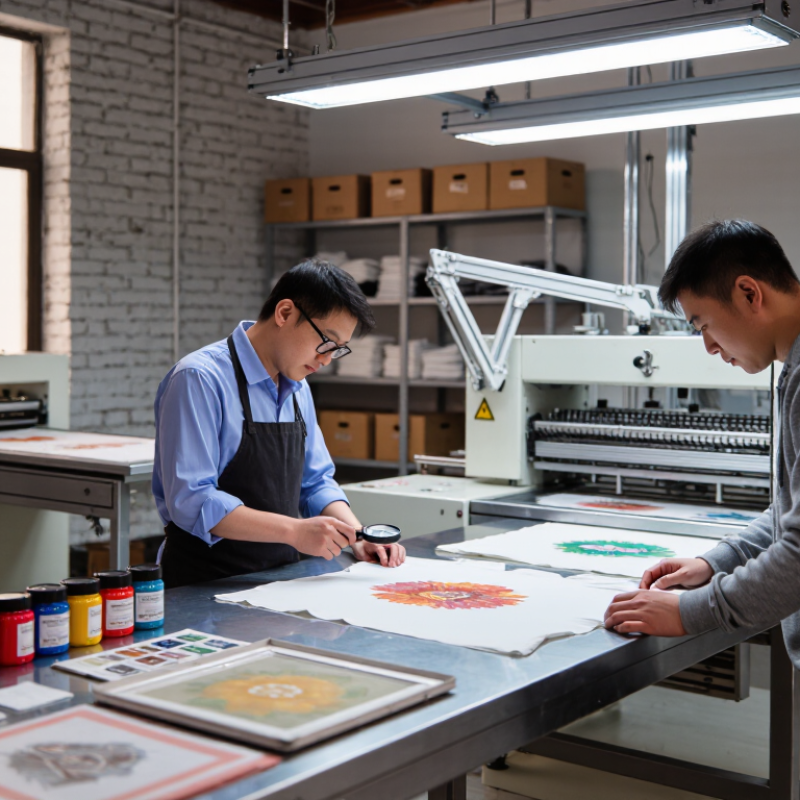
Top 10 Custom Screen Printing Services in China

Overview of Custom Screen Printing Services in China

Overview of Custom Screen Printing Services in China

Custom screen printing providers in China serve apparel makers, promotional-product suppliers, and businesses ordering branded textiles. Services commonly cover artwork checks, screen preparation, ink selection, test prints, production, and packing. Buyers can request water-based, plastisol, or specialty inks, depending on fabric and finish.

A cotton shirt and a polyester sports jersey do not behave alike under heat. Ask for a sample on the actual material.

China’s textile and apparel exports reached about US$293.6 billion in 2023, according to figures published by the China National Textile and Apparel Council. This offers useful supply-chain context, not a measure of screen-printing revenue.

Capacity alone does not prove print quality. Request details on minimum quantities, color matching, curing temperatures, and inspection procedures. A reliable supplier should explain how it checks registration and wash durability, and share a production sample before a large run.

Small text can blur. Ink can feel heavier than expected. I would also confirm whether quoted prices include setup, sampling, and export packing, since those details are easy to overlook.

How Screen Printing Works and Which Products It Serves

Screen printing pushes ink through a fine mesh onto a prepared surface. A stencil blocks selected areas, leaving the design visible on the material. Each color usually needs its own screen, so layered artwork takes careful alignment. One color at a time. After printing, the ink is cured with suitable heat or another process, depending on the fabric and ink. This helps the image resist washing and everyday wear.

The method works well for T-shirts, hoodies, work uniforms, tote bags, and other flat or slightly curved products. It can also suit paper posters and some packaging materials when the ink matches the surface. Bold graphics and solid colors often print clearly. Very fine details and color gradients may need adjustment, especially on textured fabric. A pale shirt and a dark shirt may also require different ink choices.

When comparing custom screen printing services in China, ask how they check fabric, ink, and curing settings before a full run. Request a physical sample when color or hand feel matters. Samples matter. A sample can look right under workshop lighting yet appear different in daylight; this is easy to overlook. Confirm artwork dimensions, color references, order quantity, and inspection steps in writing. Small production differences can still occur, so agree on acceptable tolerances before printing begins.

Top 10 Custom Screen Printing Services in China

For a practical guide to the top 10 custom screen printing services in China, compare what each service can produce, not just its quoted price. Common options include T-shirt printing, hoodie printing, tote bag printing, uniform printing, sportswear printing, workwear printing, and promotional textile printing. Other useful services cover specialty ink effects, artwork preparation, and sample production. Small details matter. Ask whether the printer checks fabric color, ink coverage, and placement before a full run.

A reliable supplier should explain how fabric type affects the result. Cotton and polyester can absorb or hold ink differently, so a sample on the actual material is valuable. Request a clear proof showing dimensions and colors, then confirm the expected production time and packing method. Ask how defects are recorded and whether replacement terms are written down. Not every shop fits. A low unit price may not include setup, sampling, or careful inspection, and I would want those costs stated plainly. One weakness in many comparisons is that service lists look similar, while actual print consistency can vary between batches. Check a physical sample when possible, especially for fine lines, large solid areas, or repeated uniform orders.

How to Compare Providers by Quality, Capacity, and Lead Time

To compare custom screen printing services in China, request the same test artwork from each provider. Check fine lines, small text, edge sharpness, and color consistency under neutral light. Samples reveal more. Ask for the ink type, mesh count, curing method, and documented inspection steps. A smooth sample alone is not proof: production runs can vary across shifts or fabric batches.

FESPA’s 2023 Global Print Census gathered 1,778 responses across 120 countries. It offers broad industry context, not a China-only benchmark. Use it as background, then verify each workshop directly. Ask how many pieces it can print per shift, whether that figure includes setup and curing, and how it handles rush orders. Capacity claims need context. A large machine does not guarantee a reliable schedule.

For lead time, separate sample approval, production, packing, and dispatch dates. Request a written schedule, plus the steps that could cause delays, such as ink curing or color approval. Compare the quoted timeline with recent orders of similar size, not a best-case promise. This check is imperfect; factories may share only selected examples. Still, dated job records and a small pilot run can reveal whether quality and delivery estimates hold under real conditions.

Key Factors for Choosing a Custom Screen Printing Partner

Choosing a custom screen printing partner in China starts with the actual product, not a polished catalogue. Ask which mesh counts, inks, and curing methods suit your fabric or rigid material. A sample should show clean edges, even coverage, and consistent color under ordinary room light. Small details matter. Check whether the supplier can explain how artwork is separated and how registration is controlled across multiple colors. Vague answers are a warning, even when the sample looks good.

Ask for a written sample timeline, production lead time, and inspection process. Confirm how the team checks print placement, color variation, and adhesion before packing. Ask for proof. A low quote can look convincing, and sometimes it is; compare what it includes, such as setup, sampling, packaging, and freight preparation. Clear photos of a production run can help, but they do not replace an approved physical sample. Communication matters too: send a simple specification sheet with dimensions, colors, material, and tolerances, then see whether the partner flags missing details. No process is perfect. A supplier willing to discuss a defect and its correction may be more dependable than one promising flawless results.

FAQS

What steps are usually included in custom screen printing?

Services may include artwork checks, screen preparation, ink selection, test prints, production, and packing. Confirm which steps are included in your quote.

Which products can be screen printed?

Common options include T-shirts, hoodies, uniforms, tote bags, posters, and some packaging. Flat or slightly curved surfaces are often suitable.

How do ink choices affect the finished print?

Water-based, plastisol, and specialty inks can create different finishes. Cotton and polyester may need different inks and curing settings. Ask for a sample on your actual fabric.

What designs work best with screen printing?

Bold graphics and solid colors often print clearly. Fine lines, small text, and gradients may need adjustments, especially on textured fabric. Small text can blur.

How can I check print quality before ordering a large run?

Request a physical sample and inspect edge sharpness, color, and hand feel. Check it under neutral light or daylight, not only workshop lighting.

What should I ask about production quality?

Ask about color matching, screen alignment, curing temperatures, wash durability, and inspection procedures. Agree on acceptable tolerances in writing. It is easy to overlook.

How should I compare production capacity and lead times?

Ask how many pieces can be printed per shift and whether setup and curing are included. Separate sample approval, production, packing, and dispatch dates.

What details should a written quote include?

Confirm setup, sampling, ink, production, and export packing costs. Check the order quantity and schedule, too. I may be overthinking this, but dated job records can help test delivery claims.

Conclusion

This article explores Custom Screen Printing Services in China, explaining how the process transfers designs onto products using a prepared screen, ink, and controlled pressure. It outlines common applications across apparel, promotional items, packaging, and other printable surfaces, while noting that material choice and design complexity can affect the result. A curated overview of ten service providers helps readers understand the range of capabilities available, from small custom runs to larger production orders.

To compare providers, the article focuses on print quality, production capacity, communication, and realistic lead times. It also highlights practical questions to ask before choosing a partner, including how samples are approved, how color consistency is managed, what customization options are offered, and how orders are handled from preparation through delivery. These considerations can help buyers select a service that fits their product, budget, schedule, and quality expectations.


Alric

Alric

Alric is a professional marketing specialist dedicated to helping businesses understand how thoughtful strategy, reliable products, and meaningful customer experiences work together to create lasting value. With extensive knowledge of the company’s solutions, Alric regularly contributes expert......