Choosing among the top Custom Bra Manufacturing companies worldwide requires more than comparing prices. A bra may look flawless on a showroom mannequin, yet pinch beneath the arm or lose support after several washes. These small details reveal a manufacturer’s real capability.
Heidi Zak, co-founder of ThirdLove, has often described the central challenge simply: “Fit is personal.” That principle should guide every manufacturing decision. Reliable suppliers study body measurements, cup grading, fabric recovery, strap pressure, and closure strength. They also provide clear sampling procedures, production timelines, material records, and quality-control reports. Ask for physical samples. Inspect the seams. Stretch the band repeatedly. Wash the garment before approving bulk production.
Strong Custom Bra Manufacturing partners usually combine technical pattern development with flexible production options. They may support small-batch testing, recycled fabrics, adaptive designs, and multiple cup structures. However, a large factory is not automatically the best factory. Communication can fail. Minimum order quantities may change. Sustainability claims may remain difficult to verify.
That is an uncomfortable point.
This overview evaluates manufacturers through practical evidence, not promotional language. It considers design support, factory experience, production capacity, quality assurance, ethical sourcing, and responsiveness. Public information is sometimes incomplete, so buyers should request current certificates and audit details directly. A responsible decision also requires testing products on diverse bodies, not only reviewing digital drawings. The best supplier is the one that turns accurate measurements into comfortable, durable bras, while remaining transparent when problems appear.
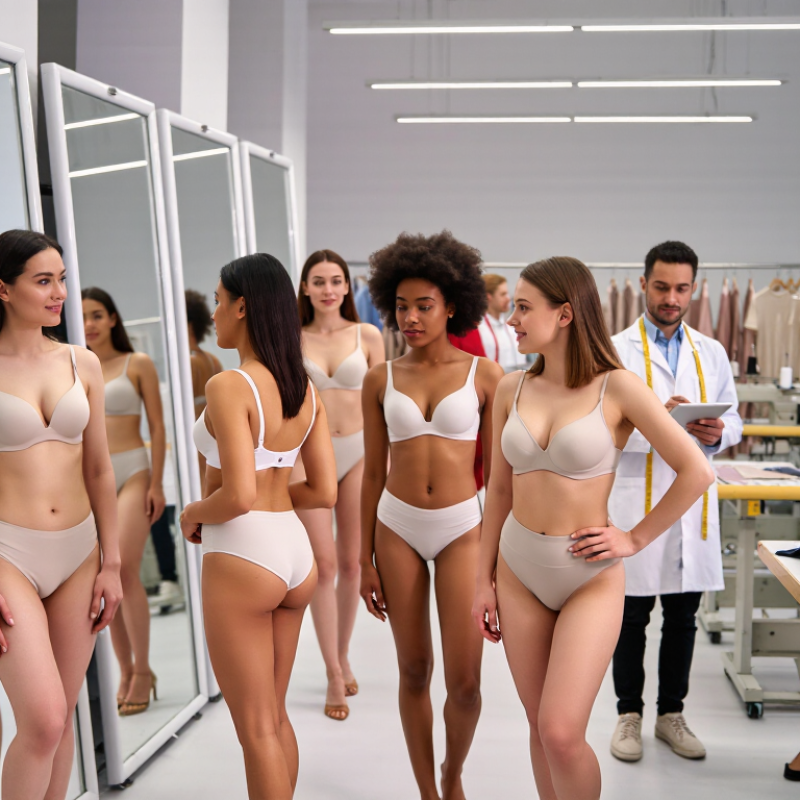
Top Custom Bra Manufacturing Companies Worldwide
Definition and Scope of Custom Bra Manufacturing
Custom bra manufacturing means developing intimate apparel to meet a specific design, fit, material, or production requirement. It may begin with a sketch, measurement chart, fabric sample, or functional brief. The process usually includes pattern development, cup construction, size grading, sampling, testing, and bulk production.
The scope is wider than sewing separate panels together. Manufacturers may adjust band tension, strap placement, cup depth, neckline shape, and support levels. They also select fabrics based on stretch recovery, breathability, softness, and durability. A technical team can test whether elastic returns properly after repeated movement. Small details matter, such as a smooth hook-and-eye closure or a seam that does not press against the skin.
Reliable production requires documented specifications and repeatable inspections. Fit models can assess different body shapes, not only one standard size. Measurements should be checked across the size range because grading can create unexpected gaps or pressure points. A sample may look excellent on a table yet feel wrong during a full day of wear.
That is where experience becomes practical. Skilled teams compare prototypes, record corrections, and review fabric behavior after washing. They also monitor stitch density, color consistency, component security, and packaging accuracy. No measurement system is perfect. Local sizing habits and personal comfort can still challenge an otherwise careful design.
| Evaluation Dimension | Definition | Typical Custom Manufacturing Scope | Verifiable Industry Evidence |
|---|---|---|---|
| Product Development | The process of converting a design brief into a technically fit bra product. | Design interpretation, technical drawings, material selection, pattern development, prototypes, fit samples and pre-production approvals. | Approved tech pack, measurement chart, graded pattern set, prototype comments and signed sample approval. |
| Bra Categories | The product groups covered by the manufacturing program. | Underwire bras, wireless bras, bralettes, sports bras, nursing bras, padded bras, minimizer bras, seamless bras and post-surgical support bras. | Product specification, construction details, support level, intended use and applicable test requirements. |
| Size and Fit Development | The adjustment of patterns and components to achieve consistent fit across sizes. | Cup-and-band grading, multiple fit models, stretch recovery assessment, strap adjustment and support evaluation. | Size chart, graded patterns, fit-test records and dimensional inspection reports. Available size ranges vary by program. |
| Materials and Components | The textile, elastomeric and hardware inputs used to construct the bra. | Polyamide or polyester fabrics, elastane blends, cotton, recycled fibers, lace, mesh, molded foam, elastic bands, hooks, sliders, rings, wires and closures. | Fiber-content declaration, supplier certificates, restricted-substance test reports and component inspection records. |
| Production Processes | The manufacturing operations used to assemble and finish the product. | Fabric spreading and cutting, precision sewing, cup molding, bonding, elastic attachment, underwire insertion, bartacking, pressing, finishing and packing. | Process flow chart, approved work instructions, machine capability records and in-line quality-control checkpoints. |
| Customization Level | The degree to which a buyer can modify the product or manufacturing specifications. | Private-label production, custom patterns, exclusive colors, branded labels, packaging, trims, support structures and performance features. | Written specification, approved artwork, component bill of materials and documented change-control procedure. |
| Quality Management | The systems used to prevent defects and maintain repeatable product quality. | Incoming-material inspection, first-piece approval, in-line inspection, final inspection, defect classification and corrective-action management. | ISO 9001 certification where applicable, inspection records, audit reports and documented corrective actions. |
| Testing and Performance | Testing that confirms the product meets defined performance, safety and durability requirements. | Colorfastness, dimensional stability, seam strength, elastic recovery, wash durability, component security and wear testing. | Laboratory test reports based on the buyer’s target market, product specification and applicable textile test methods. |
| Chemical and Product Compliance | Controls that limit hazardous substances and support legal market access. | Restricted-substance screening for fabrics, dyes, prints, elastics, foams, metal components and packaging materials. | REACH-related documentation for the European market, applicable U.S. requirements, and OEKO-TEX® STANDARD 100 certification where obtained. |
| Sustainability Scope | Environmental and social practices associated with materials, production and labor conditions. | Recycled fibers, certified organic fibers, waste reduction, efficient cutting, wastewater controls, renewable-energy initiatives and responsible labor practices. | GOTS for certified organic textiles, GRS for recycled materials, ISO 14001 for environmental management, and independent social-compliance audit records. |
| Manufacturing Geography | The locations where development, sourcing, production and export activities are performed. | Global supply chains may involve separate locations for fabric production, component sourcing, garment assembly, quality inspection and distribution. | Factory address, production-site audit, country-of-origin information, shipment documentation and supply-chain mapping. |
| Order and Production Planning | The commercial and operational arrangements required to manufacture a custom order. | Sample development, material booking, purchase-order confirmation, production scheduling, size-color allocation and shipment planning. | Quotation, minimum-order terms, approved lead-time schedule, production calendar and pre-shipment inspection plan. |
| Packaging and Logistics | The preparation and movement of finished goods from the production site to the buyer or distribution center. | Individual folding or hanger packing, carton labeling, barcode application, export documentation and air or ocean freight coordination. | Packing specification, carton-marking guide, commercial invoice, packing list and agreed Incoterms®. |
| After-Sales and Reorder Support | The services used to maintain product consistency and resolve quality or specification issues after delivery. | Reorder management, retained samples, production-history records, claim investigation, replacement procedures and specification updates. | Written warranty terms, batch traceability, complaint records and corrective-action reports. |
Note: Certification availability, product range, order quantities, production locations, testing scope and lead times vary by manufacturing facility and contract. All certifications and compliance claims should be verified against current, site-specific documentation.
Check cup molding, underwire channels, strap recovery, stitching density, and size grading. Ask for a pre-production sample. A beautiful sample proves little without testing.
Request wash-test results for shrinkage, colorfastness, elastic recovery, and seam strength. Measure cup symmetry after repeated washing. One test may miss real wear problems.
Ask where fibers originate and whether recycled content is verified. Review dyeing facilities, chemical controls, and subcontractor information. Certificates help, but they are not perfect proof.
Request named production sites, audit dates, corrective-action records, and worker-safety procedures. Ask who handles overflow orders. Ask again. Unclear answers deserve careful reflection.
Compare minimum order quantities, sample revisions, lead times, defect rates, and packaging controls. A factory promising every color and size may lack stable capacity. Small pilot runs reveal more.
Options include nylon, recycled polyamide, elastane, cotton, lace, mesh, and spacer fabric. Moisture-control knits can improve drying speed. Each fabric changes stretch, breathability, and durability.
Capable teams may offer molded cups, seamless bonding, adjustable straps, and soft underwires. They may also develop nursing access, adaptive designs, sports bras, and fuller-bust constructions. Fit still needs real testing.
Review testing, material consistency, inspection standards, and lead-time stability beside the quoted price. Very low costs may hide weak testing or unstable materials. No factory is perfect. Records matter more than confident promises.
Custom Bra Manufacturing refers to the development and production of bras tailored to specific designs, measurements, functions, and market needs. This article explains the main factors used to evaluate global manufacturers, including production experience, quality control, sampling efficiency, minimum order quantities, communication, certifications, and supply chain reliability. It also introduces the types of companies that serve different business needs, from small-batch specialists to large-scale production partners.
The discussion covers manufacturing capabilities, fabric and trim selection, support structures, comfort features, sustainable material options, and product specialties such as everyday bras, sports bras, maternity styles, and extended-size designs. It concludes with practical guidance for selecting the right manufacturing partner by comparing technical expertise, customization flexibility, pricing, production timelines, quality standards, and after-sales service. Careful evaluation can help businesses develop comfortable, well-fitting products while building a stable and efficient supply relationship.