High-grade sublimation printed activewear, 100% combed cotton jersey basics, and custom technical garments engineered for maximum dye absorption, low MOQ flexibility, and international compliance.
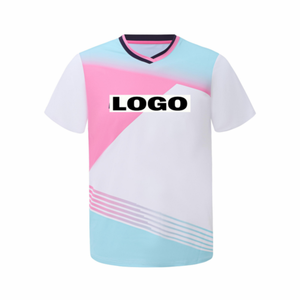
In the contemporary global textile economy, selecting the ideal OEM/ODM manufacturing partner for sublimation printing requires looking far beyond basic price-per-unit metrics. Sublimation printing—a thermo-chemical digital process where disperse dyes transition directly from a solid to a gas phase under high heat (typically 190°C to 215°C / 375°F to 420°F)—demands precise molecular bonding with synthetic polymer matrices such as polyester, nylon blends, and specialized technical elastanes. Premier Chinese manufacturing clusters (spanning Guangdong, Zhejiang, and Fujian provinces) have evolved from high-volume, low-cost assembly lines into highly sophisticated, tech-integrated apparel engineering hubs.
This comprehensive industry analysis provides brand managers, procurement directors, and independent apparel labels with the technical insight required to vet Chinese dye-sublimation suppliers, understand material dynamics, and leverage cut-and-sew integration to minimize lead times while guaranteeing Grade 4.5+ color fastness.
To assist procurement specialists in selecting the optimal decoration technology for their product catalog, the following table breaks down performance metrics across core commercial printing techniques:
| Decoration Method | Optimal Fiber Substrate | Hand Feel / Touch | Color Fastness Rating | All-Over-Print (AOP) | Ideal Order Volume |
|---|---|---|---|---|---|
| Dye Sublimation | 100% Polyester / Poly-Spandex Blends | Zero Feel (Weightless) | Grade 4.5 – 5.0 (Maximum) | Seamless Full-Garment (AOP) | 50 to 50,000+ pcs |
| Screen Printing (Plastisol) | 100% Cotton, Heavyweight Fleece | Medium to Heavy Rubberized | Grade 4.0 – 4.5 | Limited to Panel Seams | 300 to 100,000+ pcs |
| Direct-To-Garment (DTG) | High-Density Combed Cotton | Ultra-Light Soft Touch | Grade 3.5 – 4.0 | Placement Prints Only | 1 to 100 pcs (On-Demand) |
| Silicone Heat Transfer | Nylon, Compression Elastane | Elevated 3D Matte/Gloss | Grade 4.0 – 4.5 | Logo / Motif Accents | 100 to 10,000 pcs |
Our integrated manufacturing facilities combine North American design compliance (spearheaded by operational insights aligned with our Los Angeles oversight center) with China's unrivaled textile supply chain depth. By bridging local technical mastery with global quality control standardizations (AQL 2.5), we resolve the structural vulnerabilities commonly faced by overseas apparel buyers.
We deploy eco-friendly, non-toxic imported Italian Kian-Digistar inks alongside Japanese Epson PrecisionCore TFP printhead arrays. This guarantees vivid color gamut vibrancy (over 99.4% Pantone TCX accuracy) without off-gassing hazardous VOCs.
Unlike third-party decorators who print onto pre-assembled blanks (leading to white creasing under armpits and seams), our process prints directly onto unstitched, laser-cut fabric panels prior to final assembly. This ensures flawless edge-to-edge registration.
Our supply chain operates in strict accordance with OEKO-TEX Standard 100 Class I (safe for infant contact), SEDEX ethical trade benchmarks, and USDA Organic fabric options for sustainable eco-activewear collections.
The global custom apparel sourcing landscape is undergoing a structural paradigm shift driven by environmental mandates, rapid digital sample iteration, and micro-batch retail models. B2B buyers evaluating Chinese sublimation factories must align with facilities actively investing in the following four core trends:
Traditional virgin polyester synthetic fibers, derived from petrochemical refining, face increasing regulatory scrutiny in the EU and North America (such as Extended Producer Responsibility laws). Top-tier Chinese sublimation factories now offer certified rPET substrates synthesized from post-consumer recycled plastic bottles. Advanced rPET knits maintain identical melt-point stability during sublimation heating (200°C), matching virgin polyester in tensile strength, moisture-wicking capabilities, and dye absorption while reducing carbon emissions by up to 45% per production run.
Material utilization rate directly dictates unit cost. Cutting-edge manufacturing hubs utilize automated AI layout algorithms (CAD nesting) that map sublimation artwork panels onto continuous roll-fed transfer papers with sub-millimeter precision. Combined with vision-guided automatic laser-cutting machinery that tracks printed contour lines, factories achieve up to 94% fabric efficiency while eliminating manual cutting variances entirely.
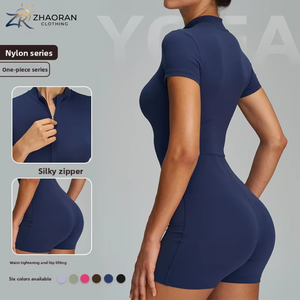
Historically, sublimation printing on Nylon 6 and Nylon 6,6 proved problematic due to nylon's lower thermal tolerance and dye migration tendencies. Breakthroughs in modified disperse dye chemistry and specialized low-temperature transfer paper now allow high-resolution, full-bleed sublimation printing on ultra-soft nylon-spandex yoga sets and body-shaping rompers without compromising the buttery-soft tactile hand feel demanded by luxury activewear brands.
In traditional wet-dye screen processes, water consumption per kilogram of fabric can exceed 100 liters. Modern industrial sublimation printing is a virtually waterless dry process. As global ESG criteria tighten, international buyers are prioritizing dye-sublimation suppliers who operate zero-wastewater facilities equipped with solar-assisted thermal transfer calenders.
Driven by the rise of athleisure, streetwear, and specialized teamwear, sublimated products have expanded from basic sports jerseys into complex fashion items. Key development trajectories include:
Our standard minimum order quantity is 50 pieces per style, which can be split across standard sizing runs (XS to 3XL) and up to two colorway variations. For simplified apparel basics like sublimated t-shirts or teamwear jerseys, small-batch test runs can begin at lower thresholds, whereas complex cut-and-sew items like padded bras or denim outerwear typically require 100 pieces per style to maintain unit cost efficiency.
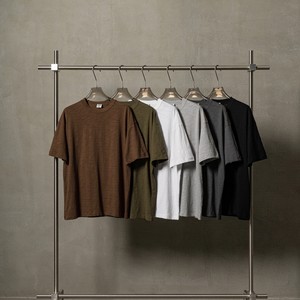
Direct dye sublimation requires synthetic polymer chains (polyester or nylon) to trap gaseous dye molecules. It cannot be performed directly on 100% pure cotton. However, for brands requiring cotton comfort, we utilize blended poly-cotton fabrics (minimum 65% polyester exterior) or apply specialized polymer pre-coatings. Alternatively, for 100% pure cotton garments (such as our 220 GSM vintage t-shirts), we recommend high-density screen printing or Direct-to-Garment (DTG) printing.
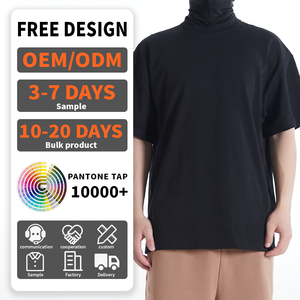
The standard timeline is structured into two main phases:
For pristine print clarity without pixelation, artwork should be provided in vector format (Adobe Illustrator .AI, .EPS, or editable PDF) with all text converted to outlines. Raster imagery (Photoshop .PSD or high-res TIFF) must be provided at 1:1 real-world scale at a minimum resolution of 300 DPI. Color codes should reference the Pantone Matching System (Pantone TCX / TPX) for accurate ink formulation.
Color consistency is governed through strict spectral analysis. We utilize X-Rite spectrophotometers to calibrate printhead output against approved digital strike-offs and Pantone master swatches. Ambient temperature and relative humidity within the transfer calender room are strictly controlled (21°C ± 2°C, 55% RH) to eliminate environmental shifts in dye sublimation gas density.
Every order undergoes a three-stage quality inspection system governed by international AQL 2.5 standards: 1) Incoming raw fabric shade, GSM weight, and stretch recovery testing; 2) In-line inspection during sewing to monitor seam tensile strength and stitch density (SPI); 3) Final post-ironing measurement audits, artwork registration checks, and wash-fastness stress testing. Detailed QC photo and video reports are submitted prior to dispatch approval.
Yes. We offer turnkey private labeling solutions. This includes heat-transfer neck labels, woven satin main labels, custom hang tags with barcode stickers, custom frosted zip-lock polybags, branded tissue packaging, and eco-friendly recyclable mailer boxes. All labeling is executed in-house prior to final carton sealing.
Whether you are an established activewear label expanding into full-bleed sublimation jerseys, or an emerging brand seeking low-MOQ cut-and-sew apparel manufacturing, our engineering team is ready to transform your tech packs into market-ready garments.