Direct from production lines: High-performance sportswear, heavy-weight streetwear, premium activewear, and customized casual wear manufactured under strict ISO quality controls.
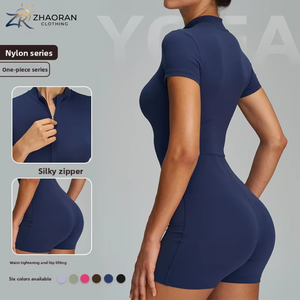
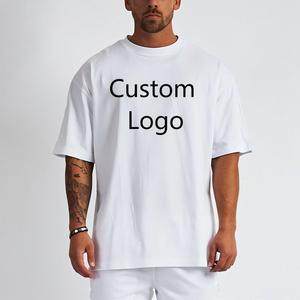
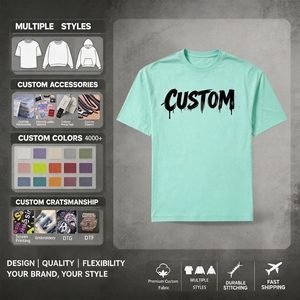
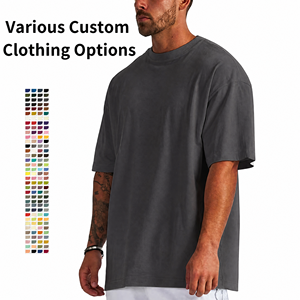
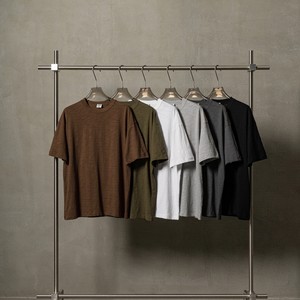
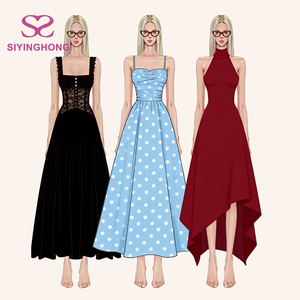
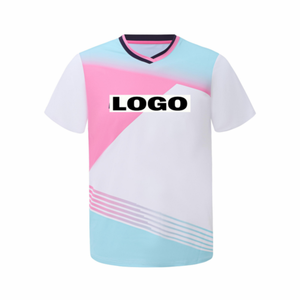
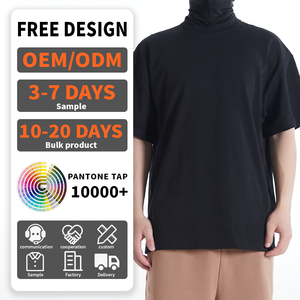
The modern apparel industry has shifted permanently from mass blank-printing toward full custom cut and sew manufacturing (FPP - Full Package Production). For high-growth DTC brands, boutique labels, and enterprise sportswear companies, partnering with premier China cut & sew factories represents the highest leverage strategy to secure gross profit margins while maintaining strict product differentiation.
Custom cut & sew production gives fashion brands complete control over garment anatomy: from specialized fabric weight (GSM), fiber composition, and yarn counts (e.g., 20s/1, 30s/1, 40s/2 combed cottons) to pattern drafting, grading, custom dyeing (Pantone TCX/TPX matching), and bespoke hardware trims. Unlike off-the-shelf blank decoration, bespoke manufacturing eliminates structural fit flaws, ensures consistent sizing runs, and enhances brand equity.
Top China factories consolidate pattern drafting, fabric knitting/weaving, dyeing, precision cutting, screen printing/embroidery, sewing, and final packaging under a unified ISO-audited management system. This eliminates multi-vendor coordination risks and seam tolerances discrepancies.
Traditional overseas manufacturing required 1,000+ units per style. Modern agile supply chain infrastructure allows brands to initiate production at 50 to 100 pieces per style, enabling fast market testing, rapid re-orders, and minimized deadstock capital risk.
Leading Chinese facilities operate under global compliance standards including OEKO-TEX Standard 100 (non-toxic textile dyes), GOTS (Global Organic Textile Standard), GRS (Global Recycled Standard for recycled polyester/nylon), and SEDEX social audits.
The global textile and apparel manufacturing sector is undergoing a profound digital transformation. Overseas buyers seeking competitive advantages must align with factory partners adopting next-generation automation, sustainable raw materials, and digital prototyping workflows.
Physical sample iteration cycles historically consumed 4–6 weeks. Modern Chinese cut and sew factories utilize 3D CAD simulation platforms (such as Optitex, Clo3D, and Gerber Technology) to render photo-realistic digital fit models directly from 2D tech packs. This cuts physical sampling rounds by 70%, lowers proto costs, and ensures micro-accurate seam alignment before physical fabric cutting begins.
Computerized numerical control (CNC) automated laser cutters eliminate manual knife deviations, maximizing fabric yield efficiency and reducing edge fraying on high-stretch synthetic activewear fabrics (Nylon/Spandex blends). Automated template sewing machines guarantee stitch consistency (e.g., 12–14 stitches per inch) across intricate pocket welts, collars, and zippers.
Procurement preferences are shifting heavily toward closed-loop fiber economies. Top tier China apparel factories now offer certified post-consumer recycled polyesters (RPET), ocean-bound plastic nylon (Econyl equivalent), organic hemp blends, and zero-discharge reactive dyeing techniques that minimize water degradation during bulk finishing cycles.
| Procurement Dimension | Legacy Overseas Sourcing | Agile China Cut & Sew Partner | Strategic Brand Benefit |
|---|---|---|---|
| Minimum Order Quantity (MOQ) | 1,000–3,000 units per colorway | 50–100 units per style (Multi-size) | Low capital requirement & zero deadstock |
| Sample Iteration Speed | 21–35 Days (Physical Mail) | 3–5 Days 3D Digital / 7–12 Days Proto | Accelerated Go-To-Market strategy |
| Quality Control Standard | Post-production end inspection | In-line AQL 2.5 Major / 4.0 Minor SOP | Sub-0.5% defect rates upon delivery |
| Fabric Customization | Limited stock fabric choices | Bespoke knitting, custom GSM & Pantone dyes | Proprietary hand-feel and product exclusivity |
| Decoration Capabilities | Outsourced third-party printers | In-house Screen Print, DTG, Sublimation, 3D Embroidery | Perfect registration & durable wash-fastness |
Achieving retail-ready apparel quality requires a rigorous Standard Operating Procedure (SOP) across every stage of the production pipeline. Below is how our audited factory infrastructure executes seamless full-package apparel manufacturing:
Every order begins with an engineering review of your garment tech pack. Our pattern makers audit flat sketches, point-of-measurement (POM) tables, seam callouts, grading scales (XS through 3XL), and care label positioning.
Prior to cutting, knit and woven bolts undergo strict incoming inspection: fabric GSM verification, color fastness testing, and 24-hour tension relaxation to prevent post-cut shrinkage and torque twisting.
Automated markers optimize fabric yield. Panels move to in-house decoration lines: high-density screen printing, discharge prints, sublimation, or 3D puff embroidery with exact placement tolerance (+/- 2mm).
Seamstresses assemble garments using specialized machinery: 4-needle 6-thread flatlock machines for activewear, heavy-duty double-needle chainstitchers for denim, and overlock machines for knit tees.
Finished garments are steam pressed, thread-trimmed, and audited under ISO AQL 2.5 standards covering measurement checks, seam strength, and stain absence before custom polybagging and carton packing.
Everything brand owners, purchasing directors, and fashion founders need to know about lead times, pricing structure, and factory compliance.
Our baseline flexible MOQ starts at 50 pieces per style, which can be split across standard sizing runs (e.g., S, M, L, XL) and up to two colorways depending on fabric availability. For complex engineered garments such as custom denim jeans, molded cup sports bras, or technical outerwear, MOQ typically ranges between 100 to 200 pieces per style to maintain fabric milling efficiencies and optimal unit pricing.
The standard timeline is divided into two phases:
CMT (Cut, Make, Trim) requires the brand owner to supply all raw materials (fabrics, thread, zippers, labels) directly to the factory; the factory only provides labor and machine assembly. FPP (Full Package Production) is a turnkey solution where the factory handles fabric sourcing, tech pack development, trim development, sampling, manufacturing, decoration, and quality control. For most emerging and scaling brands, FPP is highly recommended as it reduces shipping costs, customs clearance friction, and raw material waste.
Yes. Our in-house technical design team specializes in converting physical reference garments, sketches, mood boards, or digital photos into comprehensive, production-ready tech packs. We reverse-engineer physical garments to extract accurate fabric compositions, construction seams, stitch types, and measurement specs, creating digitized CAD patterns ready for bulk cutting.
We deliver 100% complete white-label and private-label solutions including:
Our quality control protocol adheres strictly to international ISO 2859-1 (AQL 2.5) inspection standards. Every production run undergoes three inspection gates: 1) Pre-production fabric inspection for weight, shade differential, and defect mapping; 2) In-line sewing checks to verify stitch tension, seam allowance, and print placement alignment; 3) Final random inspection reviewing measurement compliance, needle detection clearance, and packaging accuracy before release.
Get direct factory pricing, production technical advice, and a comprehensive quote for your upcoming apparel line within 24 hours. Small batch starting at 50 pcs per style.