Top Trusted Custom Embroidery Supplier & Exporter

Full-package custom embroidery manufacturing, high-density patch crafting, and direct OEM export solutions built for global fashion labels, corporate brands, and retail chains.

Factory-Direct Catalog

Featured Custom Embroidery & Apparel Products

Explore our top-exported custom embroidered patches, appliques, and full-package apparel items manufactured to strict AQL 2.5 standards.
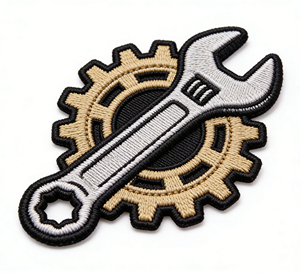
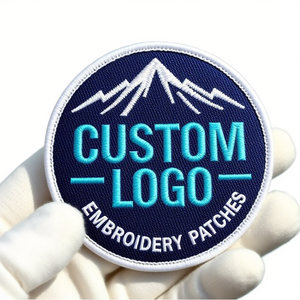
Bulk Order Custom Soft 3D Embossed Embroidered Lace Fabric Patches Brand Logo Iron on Badges for Jackets Bags

Bulk Custom Soft 3D Embossed Embroidered Lace Fabric Patches Iron-on Badges

Get Catalog
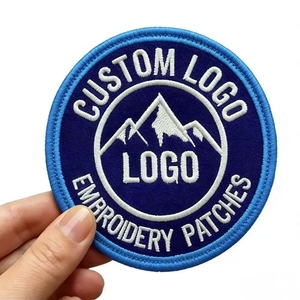
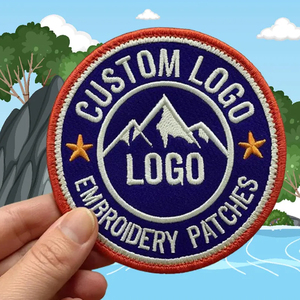
Supplier Designer Size Iron on Applique Embroidered Patches for Clothing Custom logo Hook and Loop Personalized Embroidery Patch

Designer Iron-on Applique Embroidered Patches with Hook & Loop Backing

Get Catalog
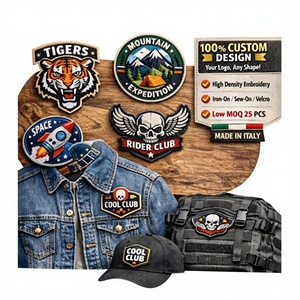
Custom Cool Morale Designer Hat Fabric Woven Full Embroidered Logo Iron on Embroidery Badges Patches for Jackets Hats Clothing

Custom Tactical Morale Woven & Full Embroidered Logo Patches for Outerwear

Get Catalog
Custom Embroidery Patches High Quality Personalized Iron-On Sew-On Flower 3D OEM/ODM Manufacturer

High-Density 3D Flower & Letter Floral Sew-On / Iron-On Custom Embroidery Badges

Get Catalog
Custom Embroidered Patches Eco-Friendly Iron-on Appliques OEM Twill Fabric Low MOQ Embroidery Badges

Eco-Friendly Twill Fabric Custom Embroidered Patches with Low MOQ Flexibility

Get Catalog
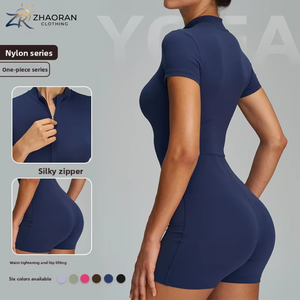
One Piece Gym Set Women Short Sleeve Yoga Jumpsuit Nylon Athletic Romper Professional Fitness Apparel Bulk Supply

Professional Activewear: Women's Nylon Yoga Jumpsuit & Fitness Romper Bulk Supply

Get Catalog
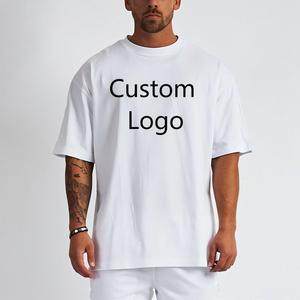
Wholesale Bulk Plain T-Shirts 100% Cotton Men's Custom Logo Oversized Tshirt High Quality Short Sleeve T Shirt for Men

Heavyweight 100% Cotton Oversized T-Shirts with Custom Logo Embroidery Options

Get Catalog
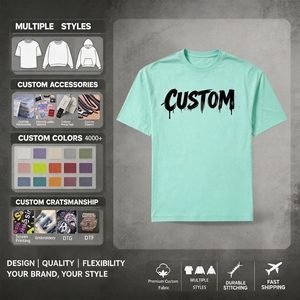
Custom Print on Demand for Men Vintage Clothing Bundles Screen Print T Shirts 220gsm O-Neck 100% Cotton Front MOQ 1 T Shirt

Premium 220GSM Vintage Cotton Streetwear Apparel Bundles & Embroidered Tops

Get Catalog
50 PCS
Flexible Low MOQ
99.8%
Stitch Accuracy Rate
7-12 Days
Rapid Sample Delivery
30+
Global Export Markets

1. Strategic Evolution of Custom Embroidery: Global Market Dynamics & Procurement Shift

In the rapidly evolving global textile and fashion manufacturing ecosystem, custom embroidery has transitioned from a traditional craft to a tech-driven industrial science. As global brands move away from mass-produced generic blanks toward highly differentiated, premium-grade apparel, the demand for precise, durable, and complex stitch decoration has grown exponentially. Modern B2B buyers—ranging from streetwear founders to corporate uniform procurement leads—require apparel partners capable of delivering exceptional tactile aesthetics without sacrificing structural fabric integrity.

Current industrial data indicates that global sourcing managers are restructuring their supply chains to prioritize manufacturers offering Full Package Production (FPP) paired with low Minimum Order Quantity (MOQ) flexibilities. Traditional overseas factories often enforce prohibitive minimums of 1,000 to 5,000 pieces per style, severely stifling agile product testing and lean inventory strategy. By lowering barrier thresholds to 50 pieces per style, modern suppliers enable growing brands to execute seasonal drops, limited-edition runs, and real-time market testing while holding margins intact.

Key Sourcing Takeaway (Information Gain Insight): High-density embroidery quality is not merely determined by thread type; it is governed by the structural synergy between backing stabilizers (cut-away vs. tear-away), vector digitizing file calibration, and machine needle tension tuning. Choosing an integrated OEM supplier eliminates fragmented vendor handoffs that cause registration errors and puckering.

Furthermore, nearshoring and strategic offshore exporting have placed strict compliance demands on raw materials. Contemporary enterprise buyers mandate adherence to environmental certifications, including OEKO-TEX Standard 100 and SEDEX Ethical Audit Standards. The integration of eco-friendly embroidery threads, recycled polyester backings, and non-toxic heat-seal adhesives represents the new benchmark for global apparel compliance.

2. Precision Engineering & Industrial Embroidery Technical Benchmarks

Achieving crisp visual representation on dense textiles—such as 450 GSM heavyweight fleece, 14 oz rigid denim, or micro-polyester activewear—demands rigorous digitizing engineering. Embroidery digitizing is the process of translating two-dimensional vector graphics into precise coordinates (DST/PES formats) that dictate needle penetration speed, stitch length, fill direction, and pull compensation.

Digitizing & Pull Compensation

Fabric stretches under needle tension. Our master digitizers apply custom pull compensation (typically 0.2mm to 0.4mm expansion) to counter fabric distortion, keeping geometric logos perfectly round and lettering razor-sharp.

Underlay Stitch Architecture

Before executing decorative satin or tatami top stitches, a structural underlay (edge walk, center walk, or double grid) is laid down. This secures the fabric grid, prevents thread sinking, and provides dimensional stability.

3D Puff EVA Foam Calibration

High-density 3D puff embroidery requires high-density 2mm to 3mm EVA foam paired with targeted stitch counts (up to 200% density over standard flat stitches) to achieve clean edge cutting without exposed foam edges.

On our Tajima multi-head industrial embroidery machines, needle speed, thread tension, and needle gauge (ranging from 65/9 for ultra-fine detail to 75/11 for heavy twill) are calibrated continuously. This automated precision guarantees zero thread breakage during high-speed runs and yields a defect rate under 0.2% across bulk shipments.

3. Technical Comparison Matrix: Embroidery Techniques & Backing Options

Selecting the correct decoration method and backing type is vital for ensuring garment longevity, wash durability, and wearer comfort. Below is an industrial comparative guide engineered to assist enterprise apparel designers and procurement executives in specifying exact production requirements:

Embroidery Technique Recommended Fabric Base Stitch Density Range Backing & Stabilizer Type Key Performance Attribute
Flat Embroidery (2D) 150–280 GSM Cotton Jersey, Pique, Twill 0.4mm – 0.5mm pitch Tear-away 80 GSM / Non-woven Smooth hand-feel, sharp typography, high wash cycle endurance.
3D Puff Embroidery Heavy Fleece, Canvas Caps, Outerwear 0.2mm – 0.3mm (Double Density) Cut-away 120 GSM + High-density EVA Bold three-dimensional impact, high visual relief, rigid stitch shell.
Chenille Patch Crafting Varsity Jackets, French Terry Hoodies Loop stitch density 3.5mm height Heavy felt base + meltable scrim Soft plush texture, classic collegiate look, excellent thermal retention.
Woven & Laser-Cut Patches Nylon Outerwear, Tactical Apparel, Bags Micro-warp high-thread count Heat-seal TPU / Hook & Loop (Velcro) Ultra-fine resolution for tiny text, zero edge fraying, removable option.
Applique Embroidery Sweatshirts, Activewear Rompers Satin edge border (0.35mm pitch) Tear-away + Twill/Lace fabric inlay Reduces total thread weight on large artwork while maintaining premium depth.

4. Future Sourcing Trends: Sustainability, Automation, and Smart Procurement

As the apparel industry accelerates toward carbon-neutral goals, custom embroidery is undergoing a technological overhaul. Enterprise buyers must align with vendors implementing sustainable production methodologies. Key trends shaping procurement budgets over the next decade include:

  • Recycled Poly & Biodegradable Threads: Utilizing 100% post-consumer recycled PET threads (such as Madeira Polyneon Green) without sacrificing tensile strength or color fastness during industrial stone washes.
  • Water-Soluble Top Stabilizers: Replacing traditional plastic films with biodegradable PVA (polyvinyl alcohol) topping films that dissolve harmlessly during washing, leaving zero micro-plastic residue on textured fabrics like terry fleece.
  • Zero-Waste Laser Bordering: Automated camera-guided laser cutters trim embroidered patch perimeters with 0.1mm accuracy, sealing synthetic edges to prevent fraying while cutting fabric waste by over 30%.
  • Integrated Tech Pack Digitizing: Direct digital transmission from Adobe Illustrator vector files into computerized embroidery machinery, shrinking proto-sample approval windows from weeks to days.

5. Affix Apparel Manufacturing Edge: Factory Integration & Quality Control

Affix Apparel operates as an end-to-end, made-to-order apparel manufacturer rooted in complete vertical control. Unlike third-party middle agents or decoration-only print shops, our operations encompass raw fabric sourcing, custom pattern drafting, cut and sew construction, screen printing, sublimation, embroidery, and private-label finishing under one operational umbrella.

By eliminating multi-vendor supply chains, we guarantee strict color matching (Pantone TCX/TPX standards), uniform sizing across size-set grading, and flawless embroidery application before garments are folded, polybagged, and packed for global shipping.


OEKO-TEX Certified Fabrics Certified Pima Cotton Supplier SEDEX Audited Facility USDA Organic Cotton
Premier Custom Apparel & Embroidery Factory Floor Operations

6. Enterprise Technical FAQ for Apparel Buyers & Sourcing Managers

We have synthesized the most vital operational questions asked by corporate buyers, apparel founders, and supply chain managers prior to placing custom embroidery orders:

Q1: What is the absolute Minimum Order Quantity (MOQ) for custom embroidered garments and patches?
Our standard production minimum is 50 pieces per style, which can be split across standard size runs (S through XXL) and multiple colorways. For basic knit items like t-shirts, caps, or standard flat patches, we maintain this low threshold to assist growing labels. Highly complex engineered garments (such as heavy denim jeans or structured intimates) typically start at 100 pieces per style to maintain cost efficiency and stitching consistency.
Q2: What is the typical turnaround timeline from design submission to final delivery?
The sampling and digitizing phase takes approximately 7 to 12 working days. Once the physical proto-sample or stitch-out proof is reviewed and approved by your team, bulk manufacturing for orders between 50 to 500 units spans 15 to 25 working days. International express air freight takes an additional 3 to 7 days, whereas sea freight shipping runs 25 to 35 days depending on the destination port.
Q3: What artwork vector formats are required for digitizing embroidery files?
For maximum stitch fidelity, we request original vector artwork in AI (Adobe Illustrator), EPS, or high-resolution PDF format with all typography converted to outlines. If you only possess raster imagery (PNG or JPG), our in-house graphic team will re-vectorize and digitize your artwork into DST or PES formats, ensuring exact stitch placement, proper pull compensation, and precise thread color matching against Pantone TCX/TPX charts.
Q4: How do you prevent fabric puckering around large, high-density embroidery designs?
Puckering occurs when stitch tension overrides the dimensional stability of lightweight fabrics. We eliminate this issue by: (1) matching fabric weight with high-performance 80 to 120 GSM cut-away backing stabilizers, (2) engineering custom structural underlay stitches to anchor the fabric prior to top stitching, (3) utilizing specialized ballpoint needles on knits, and (4) maintaining strict electronic thread tension controls across our multi-head machines.
Q5: What backing attachment options do you supply for custom embroidered patches?
We provide a complete range of industrial patch backings engineered for different application scenarios: 1. Heat-Seal / Iron-On: High-tack TPU glue applied under heat press (150°C - 160°C). 2. Hook & Loop (Velcro): Male and female sides sewn directly for tactical caps, uniforms, and morale patches. 3. Peel-and-Stick Adhesive: Temporary pressure-sensitive backing ideal for events. 4. Sew-On Blank Backing: Traditional fabric border for direct garment tailoring.
Q6: How does your quality assurance protocol guarantee zero defects in bulk shipments?
Every production lot undergoes rigorous AQL 2.5 (Acceptable Quality Limit) inspection across three production checkpoints: First, incoming raw fabric inspection for GSM accuracy, shrink rate, and color fastness. Second, in-line inspection during sewing and embroidery execution for stitch alignment and thread tension. Third, a final end-of-line audit verifying garment dimensions against tech packs, needle clearance, thread trimming, heat seal bonding strength, and custom packaging tags. Detailed inspection photos and reports are provided prior to export dispatch.

Scale Your Brand With Custom Embroidery Excellence

Partner with a verified OEM supplier built for precision, speed, and low MOQ flexibility. Contact our merchandising team today to request product samples or instant factory quotes.