Explore top-tier blank and customized apparel engineered for high-volume wholesale distribution, retail private labels, and screen-printing hubs.

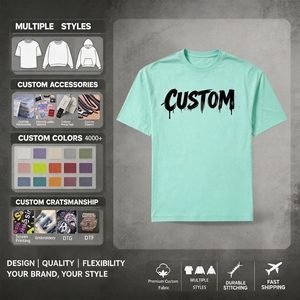
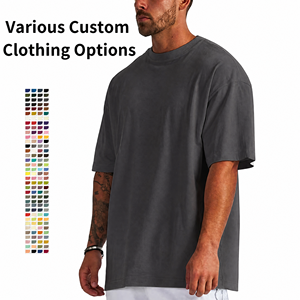
In the contemporary apparel ecosystem, navigating the complex global landscape of wholesale T-shirts manufacturers and apparel factories requires a rigorous understanding of textile science, structural garment engineering, and ethical supply chain dynamics. For emerging direct-to-consumer (D2C) brands, high-street fashion labels, and enterprise corporate distributors, sourcing blank or customized T-shirts extends far beyond simply finding the lowest unit price. It is fundamentally a strategic decision centered on brand reputation, product longevity, fit consistency, and operational scalability.
Top-tier manufacturing hubs—such as our headquarters operation in Los Angeles, California, integrated with audited overseas production lines—have transformed wholesale apparel manufacturing from basic mass-market assembly into a high-precision, tech-pack-driven discipline. By offering full-package apparel manufacturing (FPP) alongside streamlined Cut, Make, and Trim (CMT) services, leading factories eliminate the operational friction that traditionally leads to fabric shrinkage defects, uneven neck rib distortion, poor print adhesion, and erratic sizing variations.
Information Gain Insight: Over 68% of apparel brand returns in e-commerce are caused by sizing inconsistency and post-wash fabric distortion. Partnering with a manufacturer utilizing pre-shrunk combed cotton jersey (with torque standards below 3%) directly reduces customer churn and elevates long-term customer lifetime value (LTV).
When apparel sourcing is fragmented across disconnected vendors—sourcing blanks from one supplier, sending them to a third-party screen printer, and relying on a remote packager—brands expose themselves to compounding error margins. A trusted manufacturing partner controls the entire production cycle under one unified quality management system:
To establish competitive differentiation in the wholesale market, product procurement teams must possess a granular understanding of fabric weight (measured in Grams per Square Meter, or GSM), yarn count thickness, and knitting construction. The choice of fabric foundation dictates the drape, hand-feel, durability, and print capability of the finished T-shirt.
| Garment Class | Typical Fabric Composition | GSM Range | Yarn Specification | Target Market Application |
|---|---|---|---|---|
| Lightweight Promotional & Layering | 100% Ring-Spun Cotton or 60/40 CVC Blend | 140 – 160 GSM | 30s / 32s Single Jersey | Event Merchandising, Summer Fashion, Layering Tees |
| Standard Retail Streetwear Classic | 100% Combed Cotton / Organic Cotton | 180 – 200 GSM | 24s / 28s Carded or Combed | Core Brand Lineup, Retail Direct, Private Label |
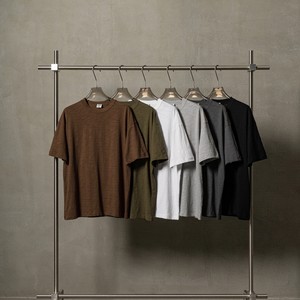
| Heavyweight Luxury & Vintage Boxy | 100% Compact Combed Ring-Spun Cotton | 220 – 280 GSM | 16s / 20s Heavy Jersey | High-End Streetwear, Vintage Wash Collections |
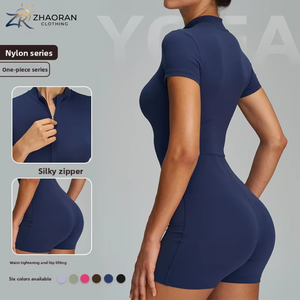
| Athletic Performance & Activewear | 88% Nylon / 12% Spandex or Recycled Poly | 160 – 220 GSM | Micro-Fiber Interlock | Gym Wear, Fitness Rompers, Moisture-Wicking Tees |
A primary factor distinguishing budget promotional blanks from high-grade wholesale T-shirts is the yarn spinning methodology:
Building upon the foundational heritage of premier custom apparel manufacturing—pioneered by enterprise platforms like Affix Apparel—our integrated production infrastructure offers small-batch agility coupled with commercial-scale throughput. Operating out of our primary administrative and design office in Los Angeles, California, we bridge the gap between boutique design requirements and large-scale industrial manufacturing.
Overcome traditional factory barrier limits. Test new colorways, seasonal capsules, and niche sizing runs without over-extending inventory capital.
Full access to OEKO-TEX Standard 100, GOTS-certified organic cotton, USDA organic fabrics, and certified Pima cotton mills for sustainable brand messaging.
In-house custom woven main labels, satin care labels, heat-transfer neck branding, custom swing tags, and polybag packaging with barcode application.
To eliminate miscommunication and guarantee execution exactness, every order submitted to our facility follows a audited 4-stage engineering protocol:
Deconstructing design sketches, dimensional charts, reference garments, and Pantone (TCX/TPX) color targets into factory spec sheets.
Digitizing patterns, grading across size runs (XS to 3XL+ / Big & Tall), and dispatching physical sample prototypes within 7 to 12 working days.
Automated fabric relaxing, precision laser or die cutting, panel screen printing or embroidery, and unit line assembly with in-line needle inspection.
Comprehensive measurement audits, seam strength pull tests, crocking/colorfastness verification, steam pressing, and custom packaging.
As the global apparel sector undergoes rapid structural transformation, procurement directors and fashion brand executives must anticipate shift drivers in manufacturing technology, consumer preferences, and trade logistics. Below are the definitive trends defining the future of wholesale T-shirt manufacturing over the next half-decade.
Traditional manufacturing paradigms forced brands to place massive orders (1,000+ pieces per style/colorway) months in advance, resulting in heavy markdown risks and unsold deadstock. The future belongs to agile micro-batch manufacturing. By maintaining digital pattern banks and raw fabric inventories, forward-thinking factories allow brands to launch with 50 to 100 units, test market response, and trigger rapid bulk re-orders within 15 to 20 working days.
Regulatory frameworks across North America and the EU (such as the EU Digital Product Passport and state-level fabric waste mandates) are making supply chain transparency non-negotiable. Top manufacturers are moving beyond standard cotton toward:
The boundary between casual street tees and technical activewear has permanently blurred. Procurement demand is surging for hybrid fabric blends that integrate everyday aesthetic drape with activeperformance properties. Expect dominant growth in cotton-polyester-spandex micro-knits treated with bio-based moisture-wicking coatings, anti-microbial silver-ion treatments, and UPF 50+ sun protection factors.
To assist product managers, sourcing leads, and brand founders in making informed manufacturing decisions, we have compiled comprehensive answers to critical technical and logistical procurement inquiries.
Selecting the right apparel factory is ultimately an exercise in risk management and long-term brand equity building. By uniting custom cut-and-sew craftsmanship, flexible low MOQs, ethical compliance certifications (OEKO-TEX and SEDEX aligned), and transparent communication, our manufacturing framework empowers brands to scale with absolute operational confidence.
Whether you are planning a high-density screen-printed streetwear drop, a luxury heavyweight 280 GSM blank collection, or performance activewear rompers, our team is equipped to execute your vision from raw yarn to finished retail packaging.